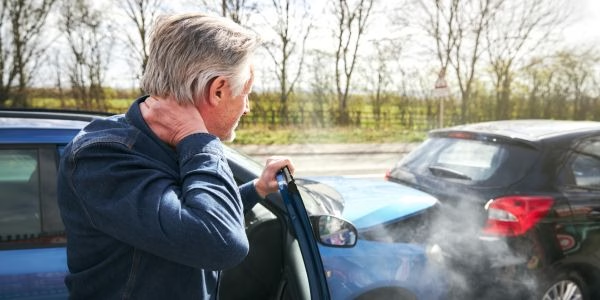
A car accident can be stressful and disorienting, even when the collision appears relatively minor. In the moments immediately afterwards, you may be dealing with shock, exchanging details, speaking to the police, contacting your insurance company and deciding whether you need medical attention.
With so much happening at once, it’s easy to say something without considering how it could be interpreted later.
Knowing what not to say after a car accident can help you communicate clearly, avoid unnecessary misunderstandings and make sure important details are properly documented.
Here are 10 things to think twice about saying after a car accident.
1. “I’m sorry”
Apologizing may be an instinctive reaction, particularly if you’re concerned about the other people involved. However, it’s usually better not to speculate about responsibility at the scene.
There may be circumstances surrounding the accident that aren’t immediately obvious. Instead of discussing who was responsible, concentrate on checking that everyone is safe, exchanging the necessary information and accurately recording what happened.
2. “I’m fine”
Immediately after an accident, you may genuinely feel fine. However, that doesn’t necessarily tell you whether you’ve sustained an injury.
The stress and adrenaline associated with an accident can make it difficult to assess exactly how you’re feeling in the immediate aftermath. Some symptoms may also become more noticeable after you’ve had time to recover from the initial shock.
Rather than making a definitive statement about your condition, pay attention to how you feel and seek appropriate medical advice if you have pain, discomfort or other symptoms that concern you.
If you experience severe or worrying symptoms following an accident, seek urgent medical attention.
3. “It was my fault”
Determining responsibility for a car accident isn’t always straightforward. Road conditions, vehicle positions, traffic signals, witness accounts, photographs and other evidence may all be relevant.
Try to stick to factual information rather than offering an opinion about who caused the accident.
You can describe what happened without deciding who was legally responsible.
4. “It was definitely their fault”
The same principle applies in the other direction.
Even if you’re convinced the other driver caused the collision, arguing about responsibility at the roadside is unlikely to help. Record as much useful information as possible and allow the relevant insurers, authorities and, where necessary, legal professionals to consider the evidence.
Useful information to collect can include photographs of the vehicles and scene, contact details, insurance information and details of any witnesses.
5. “I don’t need medical attention”
Not every car accident results in an injury, and not everyone involved in an accident will require treatment.
However, if you develop neck pain, back pain, headaches, stiffness, reduced movement or other symptoms following a collision, don’t dismiss them simply because the accident appeared minor.
A qualified healthcare professional can assess your symptoms and advise you on appropriate next steps.
Chiropractors are among the healthcare professionals people may consult for certain musculoskeletal problems, including some types of neck and back pain. Whether chiropractic care is appropriate will depend on your individual circumstances and symptoms.
6. “Let’s just sort it out between ourselves”
After a minor accident, agreeing informally to deal with repairs without involving insurers may seem like the easiest solution.
However, damage and other consequences of a collision aren’t always immediately apparent. Before making financial agreements or promises at the scene, make sure you understand your responsibilities and the terms of your insurance policy.
Taking photographs and keeping a written record of what happened can also be useful if questions arise later.
7. “I didn’t see you”
Immediately after a collision isn’t the best time to speculate about why the accident happened.
Statements made casually at the scene can sometimes be interpreted differently from the way you intended them.
When describing the accident, concentrate on what you know happened. Avoid guessing about things you didn’t see or don’t clearly remember.
8. “It’s not a big deal”
A small amount of visible vehicle damage doesn’t necessarily tell you everything about an accident.
Even following a relatively minor collision, it’s sensible to exchange the appropriate details and document the scene. If you’re experiencing physical symptoms, don’t judge their significance solely by how damaged the vehicles look.
Similarly, don’t feel pressured into dismissing discomfort simply because somebody else considers the accident minor.
9. “I’ll deal with it later”
There can be a lot to think about after a car accident, but putting everything off can make it more difficult to remember important details.
As soon as it’s practical, consider making a record of the accident while events are still fresh in your mind.
You may want to note the date, time and location of the accident, the vehicles involved, road and weather conditions, what happened immediately before the collision and any symptoms you noticed afterwards.
Keep photographs, insurance correspondence, medical information and other relevant documents together so they’re easier to find if you need them.
10. “I can’t afford to get this checked”
If you’re experiencing pain or other symptoms after a car accident, don’t ignore them solely because you’re worried about the potential cost of treatment.
Depending on your circumstances, there may be different options available for assessment and care. Before beginning treatment, ask the healthcare provider about their fees, payment options and whether your insurance may provide any applicable coverage.
At Billings Chiropractic Injury Clinic, we can explain our fees and treatment options before you decide whether to proceed with chiropractic care.
What Should You Do After a Car Accident?
Every accident is different, but your immediate priorities should be safety and accurately recording what happened.
Where appropriate, move to a safe location, contact emergency services, exchange information with the other people involved and take photographs of the accident scene and vehicle damage.
If you experience pain, restricted movement or other concerning symptoms after the accident, consider seeking an assessment from an appropriate healthcare professional.
Chiropractic Care After a Car Accident in Billings, MT
Some people experience musculoskeletal symptoms such as neck or back discomfort following a motor vehicle accident.
At Billings Chiropractic Injury Clinic, we assess patients individually to determine whether chiropractic care may be appropriate for their symptoms. Treatment recommendations depend on the findings of the assessment and the needs of the individual patient.
Chiropractic care isn’t appropriate for every injury or every patient. Where symptoms suggest that another form of medical assessment or treatment may be more appropriate, that should take priority.
If you’re experiencing neck or back pain following a car accident in Billings, contact Billings Chiropractic Injury Clinic to learn more about our approach and whether an assessment may be suitable for you.