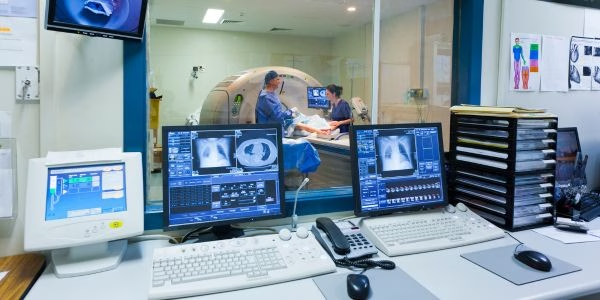
Have You Been Told Your Injuries Are "Just" Soft Tissue Injuries?
If you’ve been injured in a crash, you may have been told that you have “just a soft tissue injury.”
Sometimes that statement comes from an insurance adjuster. Sometimes it comes from a friend or family member. Occasionally, it may even come from a healthcare provider using the term as a convenient shortcut to describe a broad category of injuries.
The problem is that many people hear the words “soft tissue injury” and assume it means a minor injury.
That is not what the term means.
In medicine, a soft tissue injury simply refers to an injury involving tissues other than bone. It is a category of tissue, not a description of severity. Some of the most serious injuries seen after a crash involve soft tissues.
What Does "Soft Tissue Injury" Actually Mean?
Many people are surprised to learn that nearly everything in the human body except bone is considered soft tissue.
Soft tissues include:
- Muscles
- Ligaments
- Tendons
- Intervertebral discs
- Nerves
- Blood vessels
- Internal organs
- Brain tissue
Examples of Soft Tissue Injuries
A muscle strain is a soft tissue injury.
A herniated disc is a soft tissue injury.
A torn ligament is a soft tissue injury.
A traumatic brain injury is a soft tissue injury.
Clearly, these conditions are not all the same.
The term “soft tissue injury” tells us very little about what was actually injured, how severe the injury may be, what treatment may be needed, or how long recovery could take.
Why the Label Can Be Misleading
The phrase “soft tissue injury” is often used as if it were a diagnosis.
In reality, it is more like saying someone has a “bone injury.”
A broken finger, a fractured hip, and a skull fracture are all bone injuries, but they are very different conditions.
The same is true for soft tissue injuries.
A mild muscle strain, a torn spinal ligament, a disc injury, and a concussion may all fall under the broad category of soft tissue injury, yet they can have dramatically different symptoms, treatment needs, and long-term consequences.
The important question is not whether an injury involves soft tissue.
The important question is which tissue was injured and how severely.
Why Proper Diagnosis Matters
Many crash-related injuries produce similar symptoms.
Neck pain, headaches, dizziness, arm pain, numbness, fatigue, concentration problems, and back pain can all have multiple potential causes.
Without a thorough evaluation, it can be difficult to determine exactly what structures were injured.
This matters because different injuries often require different treatment approaches.
For example, treatment recommendations for a muscle injury may be very different from recommendations for a ligament injury, spinal instability, disc injury, or concussion.
You cannot effectively treat an injury that has not been properly diagnosed.
The goal should not simply be to assign a broad label. The goal should be to identify the specific injuries that are causing your symptoms and limitations.
Can Soft Tissue Injuries Be Measured Objectively?
Another common misconception is that soft tissue injuries are purely subjective and cannot be measured.
While pain itself is a personal experience, many soft tissue injuries can be evaluated using objective findings.
Depending on the circumstances, doctors may use:
- Imaging studies
- Functional testing
- Motion analysis
- Spinal alignment measurements
- Stability evaluations
- Neurological testing
- Orthopedic examination findings
- Laboratory testing when clinically appropriate
Objective findings help doctors better understand how an injury has affected the body and whether measurable changes are present. The most defensible evaluations typically combine the patient’s history, the crash mechanism, physical examination findings, functional limitations, imaging, and other objective testing into a complete clinical picture.
Why Documentation Is Important
Proper documentation is important for more than just diagnosis.
Medical records help establish:
- What injuries were identified
- How those injuries affected daily activities
- What treatment was recommended
- How the patient responded to care
- Whether ongoing limitations remain
Good documentation creates a clear record of the injury and recovery process.
If symptoms persist, thorough documentation can also help future healthcare providers understand what has already been evaluated and treated.
When Should You Seek Further Evaluation?
If you are still experiencing symptoms after a crash, it may be worth asking whether the underlying cause of those symptoms has been fully identified.
Persistent pain, headaches, dizziness, numbness, weakness, concentration difficulties, or activity limitations may indicate the need for additional evaluation.
The goal is not simply to call something a soft tissue injury.
The goal is to determine exactly what was injured, understand how it is affecting your life, and develop an appropriate plan for recovery.
If you have been told your injuries are “just” soft tissue injuries but you are still struggling with symptoms, a thorough evaluation may help provide a clearer understanding of your condition and your treatment options.

About the Author
Dr. Jeff Mitchell, DC, CICE
Dr. Mitchell is a speaker, coach, researcher, and treating physician for victims of car crashes. At Billings Chiropractic Injury Clinic, he’s dedicated his 20+ year career to helping people heal fully, not just “patch the pain.”