Getting into a car accident is one of the most stressful and scary experiences you can have. In addition to the physical and emotional trauma, dealing with insurance companies, police reports, and medical bills can be overwhelming. It’s important to know what to do and what to ask the other driver to protect yourself and get the compensation you deserve.
First and foremost, it’s crucial to ensure the safety of yourself and others involved in the accident. If anyone is injured, call 911 immediately. If the accident is minor and there are no injuries, move your vehicles to a safe location off the road.
Having the right information can make it much easier to report the accident, deal with insurance companies, and explain what happened if questions arise later.
So, what should you ask the other driver after a car accident?
Information to Get From the Other Driver
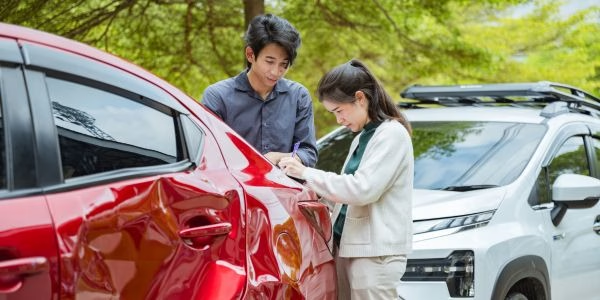
If it is safe to do so, try to collect the following information before leaving the scene:
- The driver’s full name
- Their address and contact information
- Driver’s licence information
- Vehicle registration information
- Licence plate number
- Vehicle make, model, and color
- Insurance company
- Insurance policy information
- Name of the registered owner if the driver does not own the vehicle
You may find it easier to photograph relevant documents rather than trying to write everything down, provided the other driver is comfortable with you doing so.
Check that your photographs are clear and readable before you leave.
It’s important to be polite and professional when exchanging information with the other driver. Avoid making any statements that could be perceived as admitting fault, even if you think you may have caused the accident.
What Information Are Drivers Required to Exchange in Montana?
Under Montana law, a driver involved in an accident covered by the state’s accident laws must provide their name, address, and the registration number of the vehicle they are driving. When requested and available, the driver must also show their driver’s licence.
There may be additional legal and reporting requirements depending on the circumstances of the collision, particularly when somebody has been injured or there has been significant property damage.
What Should You Avoid Saying After an Accident?
Exchanging information doesn’t mean you need to debate what happened with the other driver.
Try to remain calm and keep the conversation focused on making sure everyone is safe and exchanging the necessary information.
Avoid arguing about who caused the collision or making statements accepting responsibility before all the circumstances are known.
You should also be cautious about immediately telling the other driver that you are “fine” or “not injured.”
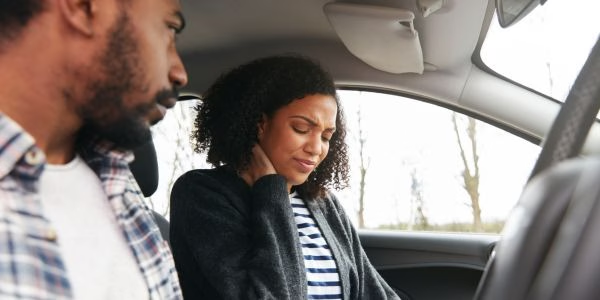
Immediately after a collision, adrenaline and shock can sometimes make it difficult to recognize pain or other symptoms. You may genuinely feel fine at the scene only to notice stiffness, soreness, headaches, or other symptoms later.
You don’t need to diagnose yourself at the roadside. Simply concentrate on your immediate safety and seek medical attention when appropriate.
Take Photos of the Accident Scene
Your phone can be extremely useful following an accident.
If you can safely take photographs, don’t limit yourself to one close-up of a damaged bumper. Try to create a visual record of the entire scene.
Useful photographs may include:
- Damage to all vehicles involved
- Each vehicle from several different angles
- Vehicle licence plates
- The position of the vehicles
- The surrounding road or intersection
- Traffic lights and road signs
- Skid marks
- Broken vehicle parts or debris
- Road and weather conditions
- Any objects or property damaged in the collision
Take both close-up photographs and wider shots showing the vehicles in relation to the surrounding road.
If the vehicles need to be moved for safety, take photographs beforehand if you can do so without putting yourself or anyone else in danger.
Get Contact Details From Witnesses
The other driver isn’t necessarily the only person you should speak to.
If someone witnessed the accident, ask whether they would be willing to provide their name and contact information.
A witness may have seen something that neither driver noticed. This can be particularly important if there is later disagreement about how the collision occurred.
Rather than getting into a lengthy discussion at the roadside, concentrate on getting their contact details so they can be reached later if necessary.
Should You Ask Whether the Other Driver Was Distracted?
You might suspect that the other driver was using their phone, speeding, distracted, or otherwise not paying attention before the collision.
However, arguing with them or trying to interrogate them at the roadside is unlikely to help.
Instead, make a note of anything you personally observed.
For example, did you see the driver holding a phone immediately before the crash? Did they appear to drive through a red light? Did you hear them make a relevant statement after getting out of the vehicle?
Record what you remember while it is still fresh in your mind.
If you have concerns that the other driver may be impaired by alcohol or drugs, tell the responding law enforcement officer rather than confronting the driver yourself.
Should You Call the Police After a Car Accident in Montana?
Some accidents must be reported to law enforcement under Montana law.
Montana law requires immediate notice to the appropriate local law enforcement agency following certain accidents, including accidents involving injury or death and accidents meeting the state’s applicable property-damage threshold.
If anyone appears to be injured, there is significant vehicle or property damage, the other driver leaves the scene, you suspect impairment, or you are otherwise unsure what to do, contacting law enforcement is a sensible step.
For an emergency or an accident involving immediate danger or serious injury, call 911.
If an officer attends the scene, make a note of the officer’s name, agency, and any incident or report number you are given.
What If the Other Driver Refuses to Give You Their Information?
Don’t turn the situation into a confrontation.
If another driver refuses to provide information, becomes aggressive, or attempts to leave the scene, prioritize your own safety.
If possible, make a note of:
- The vehicle’s licence plate
- Make, model, and color
- A description of the driver
- The direction the vehicle travels
- Any damage to the vehicle
What If the Other Driver Leaves the Scene?
If a driver leaves following a collision, try to remember as much as possible about the vehicle without attempting to follow or chase it.
The licence plate is particularly useful, even if you only remember part of it.
Write down everything you can remember as soon as possible. Look for witnesses and nearby businesses or properties that may have security cameras.
Report the incident to law enforcement and contact your insurance company.
What If the Other Driver Doesn’t Have Insurance?
Finding out that another driver doesn’t have insurance can make an already stressful situation even more worrying.
You should still collect as much information as possible about the driver and vehicle and document the accident thoroughly.
Report the accident when required and contact your own insurer. Depending on your policy and the circumstances of the accident, your insurance coverage may include provisions relevant to collisions involving uninsured or underinsured motorists.
Your insurance provider can explain the coverage available under your particular policy.
Write Down What Happened While You Still Remember It
Memories fade surprisingly quickly.
Once you’re somewhere safe, write a short account of the accident while the details are fresh in your mind.
Include things such as:
- Where you were traveling
- Your approximate speed
- The direction each vehicle was traveling
- Traffic conditions
- Weather and visibility
- What you saw immediately before the collision
- Where the impact occurred
- Anything the other driver or witnesses said afterward
You don’t need to create a perfect formal statement. The purpose is simply to preserve details you might otherwise forget.
What Should You Do After Exchanging Information?
Once you’ve exchanged information and documented the scene, your next steps will depend on the seriousness of the accident.
You may need to speak with law enforcement, arrange for your vehicle to be recovered, notify your insurance company, and seek medical attention.
Most importantly, pay attention to how you feel.
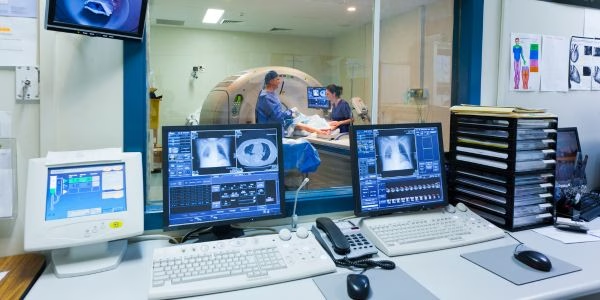
Some injuries are immediately obvious following a collision. Others may become more noticeable during the hours or days afterward.
When Should You See a Chiropractor After a Car Accident?
If you develop musculoskeletal pain, stiffness, or reduced mobility following a collision, a chiropractor may be one of the healthcare professionals involved in assessing and treating your symptoms.
At Billings Chiropractic Injury Clinic, we regularly work with people experiencing neck pain, back pain, whiplash-related symptoms, and other musculoskeletal problems following auto accidents.
An evaluation can help identify how the accident may have affected your muscles, joints, and movement and determine whether chiropractic care is appropriate for your particular condition.
Chiropractic care isn’t a substitute for emergency medical treatment. If you have symptoms suggesting a serious injury, seek appropriate emergency or medical care first.